
Date of Offense
Offense(s)
Official Statement
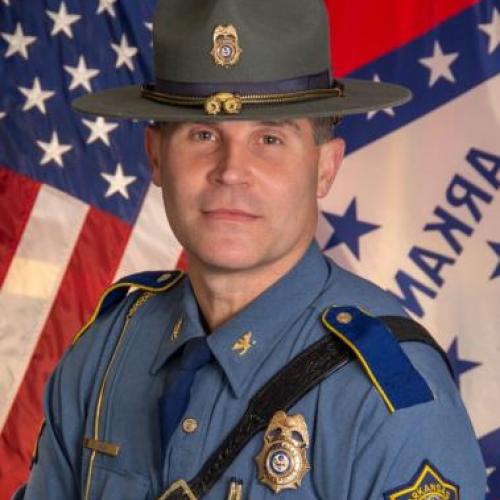
Mike Hagar, as Director and Colonel of the Arkansas State Police, bears command responsibility for the conduct, discipline, supervision, training, and public credibility of the agency. Arkansas State Police’s own official description states that the Director “bears the responsibility for all department operations,” and the Arkansas Department of Public Safety publicly claims a mission grounded in “ethical, character-driven behavior,” “professionalism,” “clear communication,” and “accountability.” Those standards are not optional slogans; they are the baseline obligations of a statewide law-enforcement command structure.
The recent misconduct allegations involving Arkansas State Police personnel demonstrate a command failure under Hagar’s leadership. Former Trooper Michael Austin Kennedy resigned after divorce filings exposed alleged racist, sexist, homophobic, anti-Muslim, anti-Hispanic, anti-Black, and anti-LGBTQ text messages, including alleged slurs, hate-speech memes, and photos of Kennedy posing with a person he had arrested while using anti-Hispanic language. Public reporting further states that Kennedy allegedly bragged about arresting people from minority backgrounds and that his own response acknowledged the offensive communications while attempting to frame them as past conduct.
This is not merely an individual personnel embarrassment. A sworn state trooper allegedly expressing racial animus while referencing arrests and detained persons creates a direct Brady/Giglio concern because it bears on bias, selective enforcement, credibility, motive, truthfulness, and the reliability of every case in which that trooper participated. When such conduct surfaces only through private litigation rather than internal detection, discipline, or disclosure, the failure is institutional. It indicates that Arkansas State Police command either did not know what it was required to know, did not act when it should have acted, or maintained no effective system capable of identifying officers whose bias, dishonesty, or misconduct would materially affect criminal prosecutions.
The same pattern is reinforced by the incident involving Trooper Christopher Weatherly. Dash-camera footage obtained through a public-records request reportedly showed Weatherly responding to geese and goslings in the roadway, spending time at the scene before the animals were struck, and later appearing to back up and run over another gosling after civilian video ended. Arkansas State Police publicly defended the incident as a traffic-safety response, and Hagar personally addressed the matter publicly rather than clearly announcing transparent discipline, independent review, or a command-level reassessment of judgment, restraint, and field decision-making.
These incidents together support a complaint for command failure against Director Mike Hagar. Under his leadership, Arkansas State Police has presented public evidence of deficient screening, deficient supervision, deficient discipline, deficient Brady/Giglio compliance, and deficient cultural control over sworn personnel. A director responsible for all department operations cannot disclaim responsibility when officer misconduct implicates racial bias, abuse of authority, cruelty, public trust, and prosecutorial disclosure obligations.
The Brady List should identify Mike Hagar for command misconduct because the failure is no longer confined to isolated officer behavior. The problem is the command environment that allowed such officers to remain credentialed, armed, publicly trusted, and available as state witnesses until exposure occurred outside the department’s own accountability structure. Unless Arkansas State Police can provide transparent proof of full Brady/Giglio review, affected-case notification, discipline, decertification referral where appropriate, and disclosure to prosecutors and defendants, the agency should be treated as presumptively noncompliant in cases materially dependent on Arkansas State Police testimony, reports, arrests, searches, or investigative representations.


